
The Sensory Fair
Designed as an immersive educational experience where families learned how our sensory systems shape emotional regulation, mental health, and everyday behavior.
Through hands-on stations our Sensory Fair attendees explored how senses such as sound, touch, breath, and immersive environments influence our stress responses, focus, and ability to self-regulate. Our goal was to
- empower families with practical coping skills
- demystify behaviors often misinterpreted as “defiance,”
- provide accessible science-based coping tools that support healthier nervous system development across childhood.
Fair attendees learned...
Stress in children often appears as movement, silliness, or big emotions; not misbehavior.
Sensory overload (noise, crowds, unpredictability) can trigger fight-or-flight reactions.
Children regulate through the body first because their cognitive skills mature later.
Proprioception, breathwork, and rhythmic movement activate the parasympathetic nervous system.
Signs of dysregulation include restlessness, irritability, meltdowns, avoidance, and shutdown.
Caregivers can co-regulate by modeling breathing, slowing their own voice, and creating predictable sensory environments.
Simple, daily sensory tools can reduce anxiety, improve focus, and support emotional resilience.
VR technology can enhance therapeutic outcomes in communication, motor skills, and emotional learning.
Environmental sound quality heavily influences mood, attention, and stress recovery.
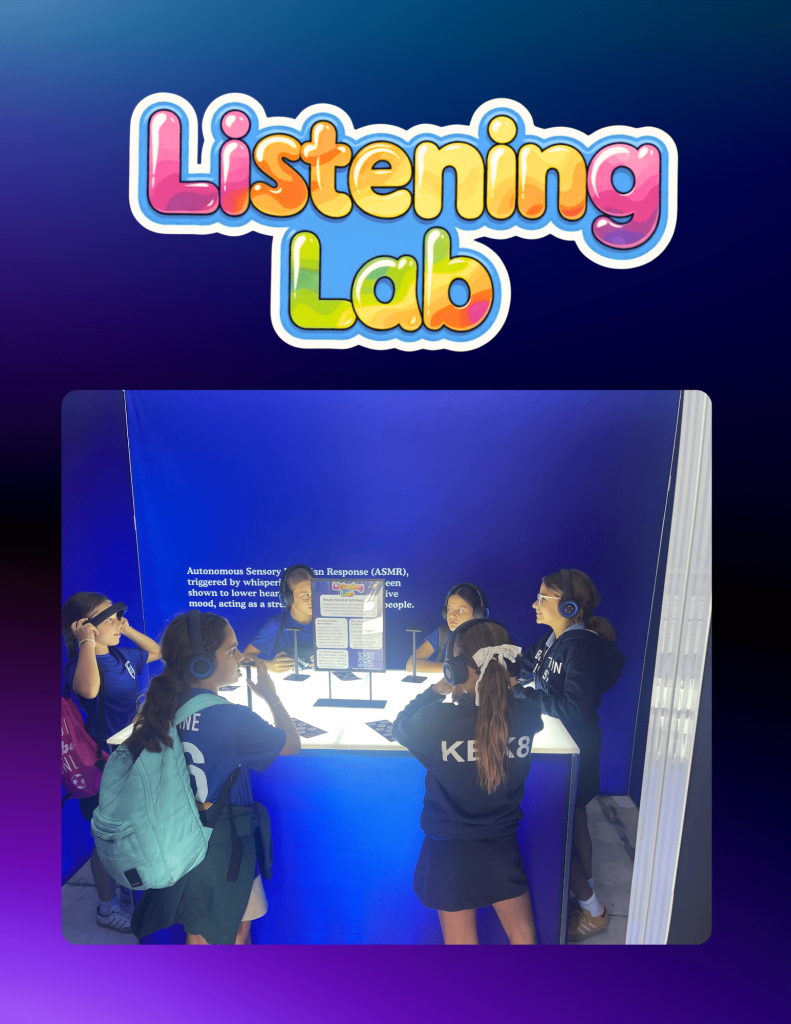
Listening Lab (Sound & Stress)
How layered noise triggers the body’s fight-or-flight response.
The role of the amygdala and vagus nerve in sound-driven stress.
Signs of auditory overload in kids (tantrums, irritability, avoidance, hyperactivity).
How music therapy supports emotional recovery and regulation.
Coping skill: sound resets using calming tracks, slow rhythmic music, or quiet corners.
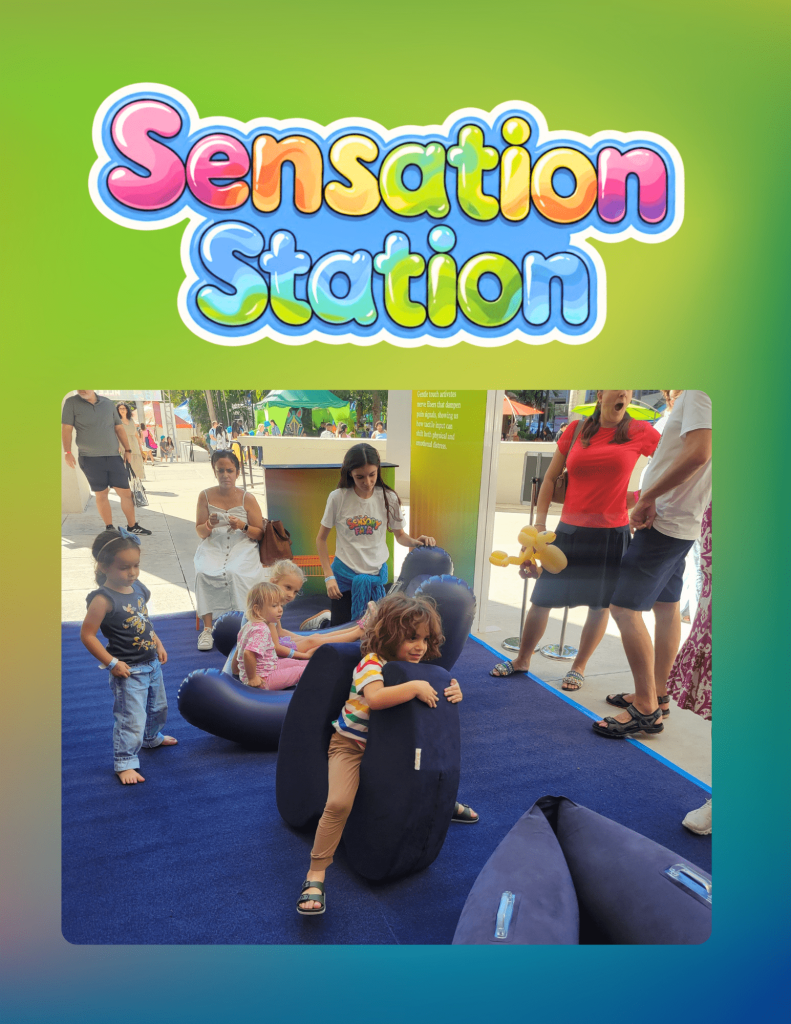
Sensation Station (Touch, Texture & Movement)
Why children seek movement, squeezes, or tactile play when overwhelmed.
Understanding proprioception and how the body uses pressure to self-regulate.
The link between tactile input and reduced anxiety.
Signs of proprioceptive needs: crashing, climbing, pacing, chewing, bouncing.
Coping skill: deep pressure, squeezing tools, movement breaks, and rhythmic swaying.
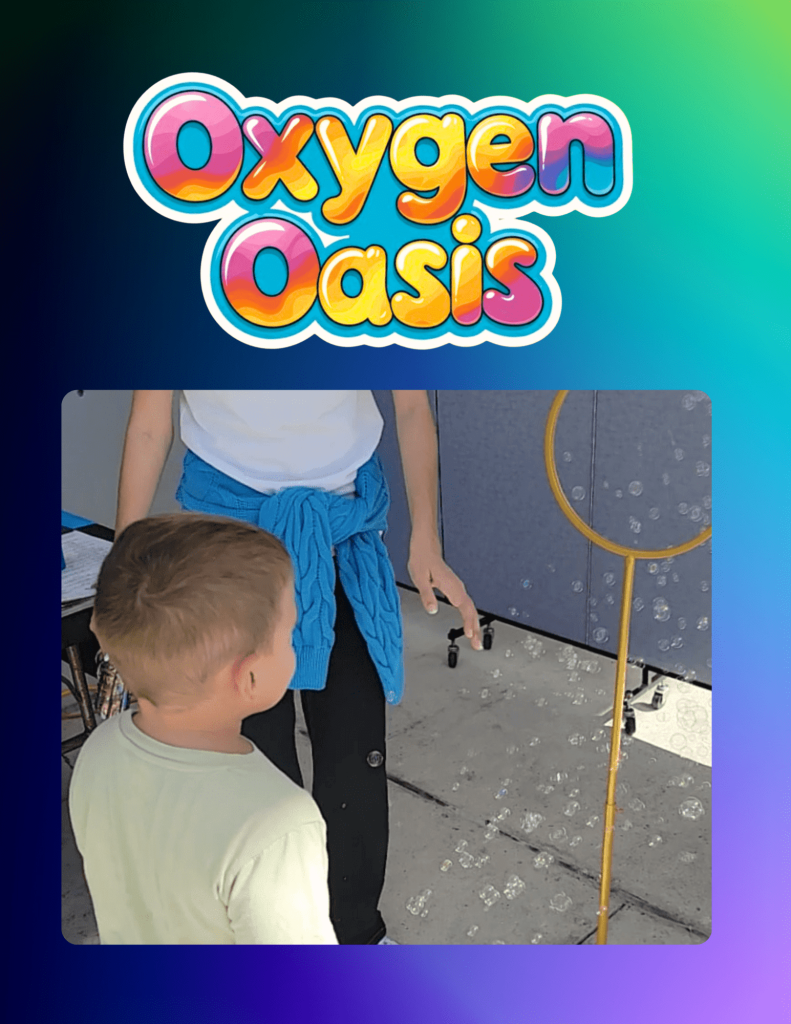
Oxygen Oasis (Breath & Regulation)
Why shallow breathing worsens anxiety, tantrums, and panic cycles.
The benefits of belly breathing and strong exhales for oxygen uptake and calming.
How breathwork immediately increases oxygen intake by up to 15%.
Signs of breath-related dysregulation: fast breathing, tight chest, trouble focusing.
Coping skill: slow exhale techniques, guided breathing tools, and co-breathing with a caregiver.
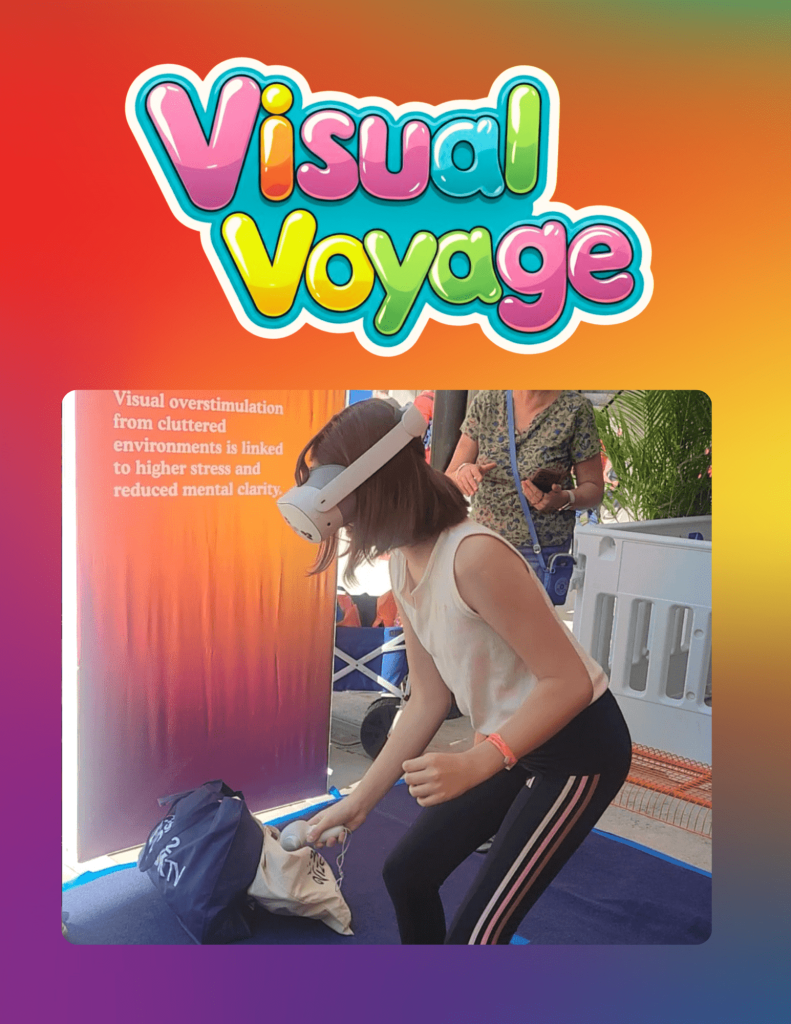
Visual Voyage (VR for Immersive Therapy & Social Learning)
How VR enhances communication and social skill-building in ASD populations.
Benefits of VR for physical therapy: balance, mobility, and motor planning.
The role of immersion in reducing anxiety and improving emotional expression.
Signs of kids who may benefit from VR-based interventions: motor delays, social avoidance, sensory anxiety.
Coping skill: guided VR sessions that support emotional regulation and adaptive behavior practice.
Host the Sensory Fair
If your university, company, school, or community organization would like to host CREATE’s Sensory Fair, we would love to bring this powerful educational experience to you. Our interactive exhibit provides practical mental health education and actionable coping skills that can help support people right away. Our team provides full setup, staffing support, and tailored programming for each community.
To inquire about hosting opportunities, please reach out and our team will be in contact.